
What’s Included?
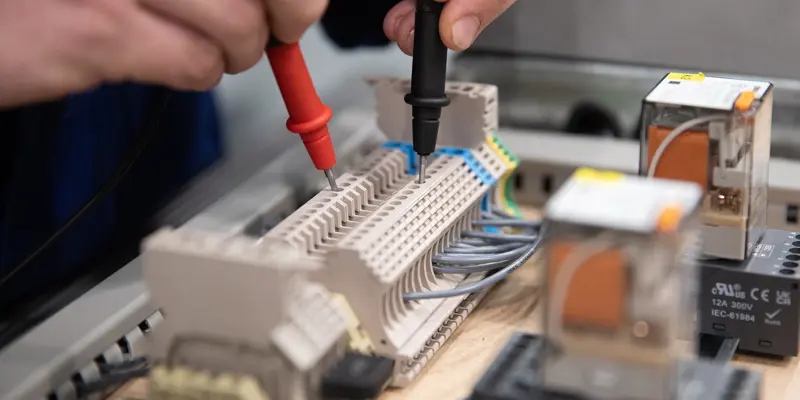
This course includes expert-led instruction, hands-on practical exercises, and all required learning materials. Training focuses on electrical safety, motor fundamentals, circuit properties, and safe isolation procedures using a structured method statement approach.
Who Should Attend?
This course is designed for individuals looking to develop essential electrical maintenance knowledge and skills. It is suitable for those new to electrical maintenance or those requiring a structured introduction to safe working practices.
Assessment
- Assessment is continuous and practical, based on safe working practices, correct use of tools and test equipment, and successful completion of practical tasks throughout the course.
Additional Notes
Please note that this course may be cancelled and rescheduled if no uptake is received up to 14 days prior to the course start date.
A cancellation fee of 30% will be charged for cancellations within 24 hours of the course date. Failure to attend without notice will result in a full charge.
Get in touch for more information
The course gave me a solid understanding of electrical maintenance and electrical safety. It was very practical and easy to follow.
Anon. Participant
Course Content
Electrical safety and legislation
-
Electrical symbols and drawings
-
Introduction to AC induction motors
-
Electricity at Work Regulations
-
Introduction to motor control circuits
-
Use of cables, hand tools, and terminations
-
Safe isolation using a method statement system
-
Introduction to fault-finding techniques
-
Ohm’s Law
-
Basic circuit properties (series and parallel circuits)
-
Identification of electrical and electronic components
-
Use of electrical test equipment
-
Testing motor windings
-
Lock-off, tag-off, and testing for dead
Course Objectives
By the end of this course, participants will be able to:
Work safely in accordance with electrical safety legislation
-
Interpret basic electrical symbols and drawings
-
Understand fundamental electrical principles
-
Apply safe isolation procedures correctly
-
Use electrical test equipment safely
-
Identify basic electrical faults
Partners & Stakeholders
We work alongside awarding bodies, industry organisations, and national partners to support high-quality engineering training and workforce development across Scotland.


