
Modern Apprenticeship
Engineering: Asset Lifecycle and Maintenance
Develop advanced skills in engineering asset management, covering every stage of the lifecycle from installation to decommissioning.
What is Engineering: Asset Lifecycle and Maintenance?
This engineering apprenticeship pathway prepares candidates with the expertise required to manage engineering assets efficiently. Apprentices will develop the skills and knowledge necessary to install, repair, replace, design, and model assets and components. Additionally, they will gain practical experience in maintaining and optimising engineering systems, with a focus on ensuring safety, reliability, and cost-effectiveness.
These competencies are vital across industries such as energy, manufacturing, and rail. The apprenticeship prepares individuals for roles including maintenance engineer, mechanical engineer, electrical engineer, and rail engineer.
Information for Apprentices
Typical minimum entry requirements
- Three National 5s, or equivalent, including Mathematics*, English, and a science or technical subject; OR
- National Qualification at SCQF level 5 in Engineering
What will I earn?
- EKGTA do not pay your salary, this varies by employer. You will earn at least the National Minimum Wage for apprentices.
How long does it take?
- Modern Apprenticeships are competency-based qualifications, but will typically last around four years.
More information for candidates can be found here:
*Application of Maths/Lifeskills Mathematics are generally not considered.
Information for Employers
How can you support How will EKGTA support us?
- We can support you during the full process from recruitment, to foundational training, and continual assessment and monitoring once your apprentice is back at company.
Can I customise the training?
- The apprenticeship can be fully tailored to your needs at every stage.
What does it cost? Is funding available?
- Costs vary by requirements but can be subsidised by Skills Development Scotland depending on the age of the candidate.
Who pays the apprentice?
- The apprentice is paid by your company, like any other employee.
More information for employers can be found here:
What does it involve?
Vocational Training
A 20-week training block, developing essential skills like safety compliance, technical data interpretation, and efficient working practices.
Three mandatory units and five optional units ensure the training is tailored to the chosen pathway, covering areas such as fault diagnosis, commissioning, and maintenance scheduling.
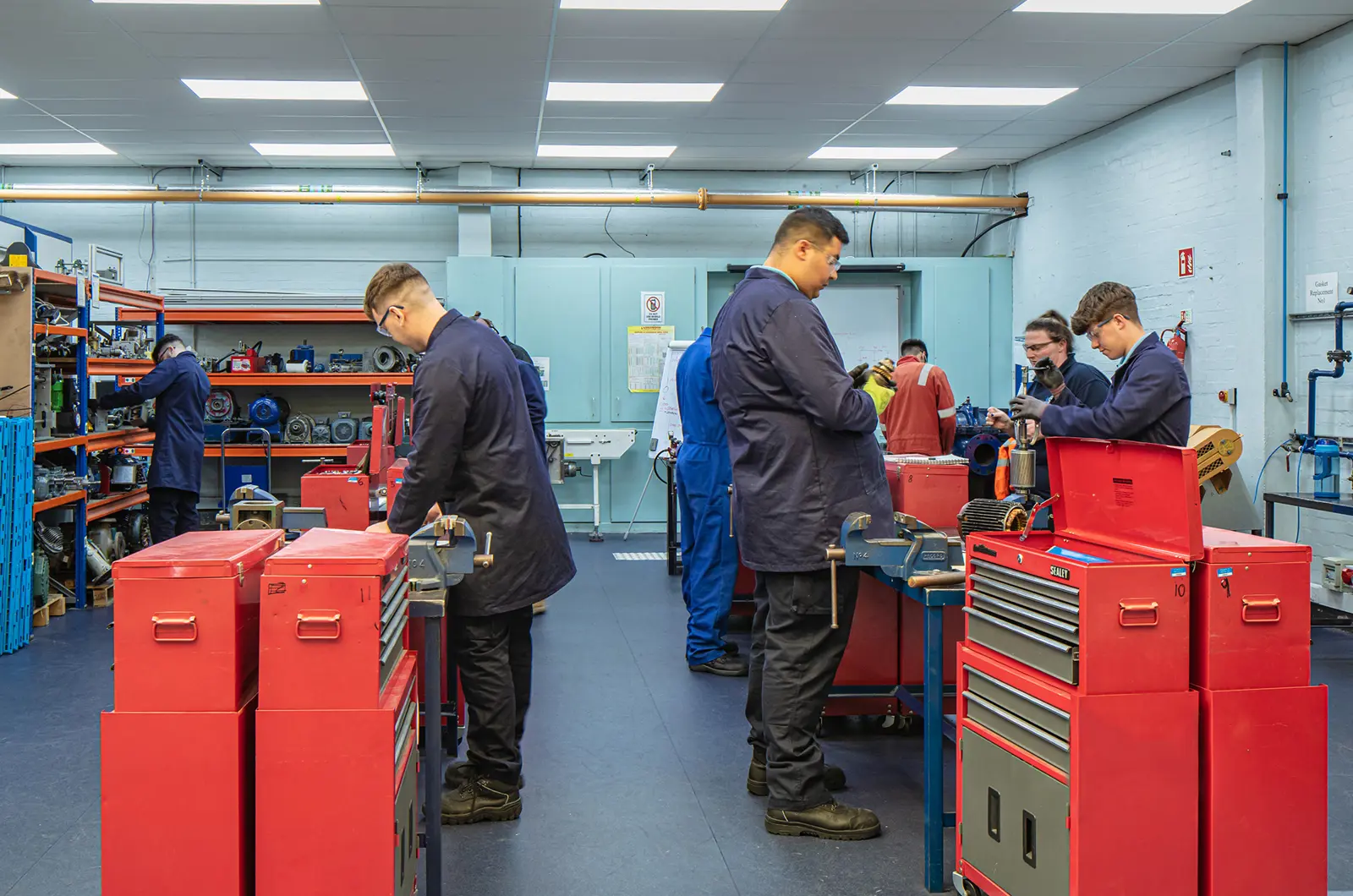
Delivered in our state-of-the-art workshop, this phase builds technical proficiency, preparing apprentices for practical challenges in the workplace.
Academic Qualification
Delivered in The Academy over 20 weeks, apprentices gain foundational knowledge in systems principles, measurement techniques, and IT applications to deepen engineering knowledge.
Apprentices also learn communication and mathematical skills, essential for problem-solving and professional interactions.
This phase enhances analytical thinking and problem-solving, bridging the gap between academic learning and hands-on applications in engineering.
Advanced Certification
After the core 40-week program, apprentices return to the workplace where they refine skills in diagnosing faults, sustainability practices, and commissioning engineering systems.
A portfolio showcases their technical achievements and meta-skills including critical thinking, problem-solving, adaptability, and creativity.
Achieving the Diploma at SCQF Level 7 signifies readiness for advanced roles in managing engineering assets.
Scottish Vocational Qualification
SVQ Level 2 Performing Engineering Operations at SCQF Level 5
National Certificate (NC)
National Certificate in Engineering Systems at SCQF Level 7.
EAL Diploma
Engineering: Asset Lifecycle and Maintenance at SCQF Level 7.
Other pathways to consider


Partners & Stakeholders


